Sam Pybis PhD, FHEA
Senior Lecturer (Associate Professor) in Economics
Department of Finance and Economics, Manchester Metropolitan University
Office 6.32, Business School, Manchester Metropolitan University (by appointment)
I am a Senior Lecturer (Associate Professor) in Economics at Manchester Metropolitan University. I work in empirical finance and applied econometrics, and my research asks when, and why, stock market returns can be forecast: empirical asset pricing, forecasting, and the role of uncertainty in financial markets. I also keep datasets from published research up to date, refreshed each month and posted with the code that rebuilds them.
Before joining Manchester Met in 2021 I studied at the University of Liverpool, where I completed a BSc in Economics, an MSc in Finance and a PhD in Economics and Finance.
Research fields: Empirical asset pricing · Applied econometrics · Stock return predictability · Financial market uncertainty · Volatility modelling · Forecasting
Publications
- Uncertainty and Real Estate Return Predictability: Evidence from U.S. REITswith Damian Damianov and Yawen Zheng
Rises in financial uncertainty predict lower U.S. real estate returns. Using six real estate and equity return series from 1987 to 2022, the monthly change in the Ludvigson, Ma and Ng financial uncertainty index forecasts REIT returns in and out of sample, with out-of-sample R² of around 9% and annual utility gains above 10% for a mean–variance investor. A Campbell–Shiller decomposition shows that uncertainty mainly signals lower expected cash flows, and the slow, persistent response is strongest among smaller and less-followed REITs.
- Industry Signals and the Dynamics of Stock Market Predictabilitywith Michael Ellington and Yawen Zheng
- [summary]
- [published version]
- [slides]
- []
Do industry portfolios carry information about where the whole market goes next? Using U.S. data from 1926 to 2024, we show that regressing market returns directly on lagged industry returns finds almost nothing out of sample. Splitting the market return into its components first, and letting industries forecast only the short-run repricing part, produces consistent out-of-sample gains. The sum-of-the-parts design is the strongest, and the gains are economically meaningful for a mean–variance investor.
- Can financial uncertainty forecast aggregate stock market returns?with Ólan Henry and Semih Kerestecioglu
- [summary]
- [published version]
- [slides]
- []
We ask whether financial uncertainty forecasts monthly U.S. stock market returns. Over 1978–2021, both the level of the Ludvigson, Ma and Ng (2021) financial uncertainty index and, especially, its monthly change predict lower future excess returns, outperforming the 14 standard Goyal–Welch predictors and short interest. The results survive persistence-robust IVX inference, and the change in uncertainty delivers out-of-sample R² of roughly 7–10%.
- Can we forecast better in periods of low uncertainty? The role of technical indicatorswith María Ferrer Fernández, Ólan Henry and Michalis P. Stamatogiannis
We ask whether the forecasting power of technical indicators depends on financial uncertainty. Splitting 1960–2018 into calm and turbulent regimes with the Ludvigson, Ma and Ng (2021) uncertainty index and a Markov-switching model, we find that moving-average, momentum and volume rules forecast the equity premium, and its volatility, in low-uncertainty periods but not when uncertainty is high. The pattern is consistent with investor disagreement rising with uncertainty and undermining trend-following signals.
Working papers
- Forecasting in Periods of Heightened Uncertainty: The Importance of Aggregate Short Interestwith Ólan Henry, Semih Kerestecioglu and Michalis P. Stamatogiannis
- [summary]
- []
Shows that aggregate short interest improves stock market return forecasts in periods of high uncertainty.
- The Predictive Role of Extreme Weather Events: Evidence from the U.S. Coal Sectorwith Lotanna E. Emediegwu
- []
Connects climate shocks to sector returns and commodity pricing behaviour.
- Forecasting Oil Prices at Month End: Which Predictors Work?with Wei Jin, Yawen Zheng and Michael Ellington
- []
Identifies which macro and financial variables keep their predictive power under real-time out-of-sample evaluation.
- Don’t Industries Lead Stock Markets?
- []
Tests lead–lag dynamics between industry portfolios and aggregate market returns. Presented at the 17th International Conference on Computational and Financial Econometrics (CFE 2023), Berlin.
- Oil and Equity Momentum
- []
Shows cross-asset momentum transmission between equity and commodity markets.
PhD thesis
- Essays Exploring Predictive RegressionsThree essays on when stock market returns can be forecast, and on the econometric traps that make predictability look stronger, or weaker, than it really is.
- [overview]
Updated datasets
Series from papers I really enjoyed reading, kept up to date because I think they deserve to be: extended with the latest figures from the original sources and posted with the code that rebuilds them. All updated datasets
- Job openings-to-employment ratioJob openings as a share of employment. A high ratio has been followed by lower stock market returns.
- [chart and notes]
- [CSV]
- [Python]
- [MATLAB]

- Large public-company bankruptciesChapter 7 and 11 petitions by US public companies with assets over $100 million in 1980 dollars, continued from SEC filings with the database’s own definition.
- [chart and notes]
- [CSV]
- [case list]
- [Python]
- [MATLAB]
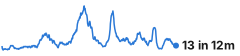
- Technical trend indicatorsThe paper’s fourteen buy and sell rules, replicated exactly and updated, and the same price rules for oil, metals and crops, and a trend uncertainty index (the share of rules on sell) that tracks the VIX.
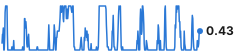
- Oil supply, demand and risk shocksEach month’s oil price change split into supply, demand and risk shocks using oil producers’ share returns and VIX innovations, rebuilt from free data and checked against the paper. Supply shocks are bad for stocks, demand shocks good.
- [chart and notes]
- [CSV]
- [Python]
- [MATLAB]
Public writing
Resources
- Data for empirical finance
A guide to 87 datasets, from Kenneth French’s factors and Amit Goyal’s equity-premium predictors to uncertainty indexes, yield curves, real-time data and academics’ own data pages, with notes on why each is useful.
- Finance journals and their submission fees
What 62 finance journals charge to submit a paper, with discounts, refunds and links to each journal’s guidelines.
Teaching & supervision
- Current teaching
- Economics of Corporate Finance I & II (second-year undergraduate, module lead)
- Previously taught
- Econometrics, quantitative methods, international finance, empirical finance and corporate finance, at undergraduate and postgraduate level (Manchester Metropolitan University and the University of Liverpool).
- Dissertation supervision
- I supervise undergraduate and postgraduate dissertations in applied econometrics, financial market analysis, and macroeconomic forecasting and risk analysis.
I welcome enquiries from prospective PhD students in empirical finance, particularly applied econometrics, asset pricing and financial market uncertainty: for example predictive regressions, return predictability, and forecasting macro-financial variables. Please email me with a CV and a short (one to two page) research proposal.
External examiner, Coventry University London (2022). Fellow of the Higher Education Academy.